 reGOTCHA
10 Tips to Reduce CAPTCHA Encounters in Web Scraping
Proven strategies to minimize CAPTCHA triggers: request pacing, header rotation, residential proxies, and behavioral patterns.
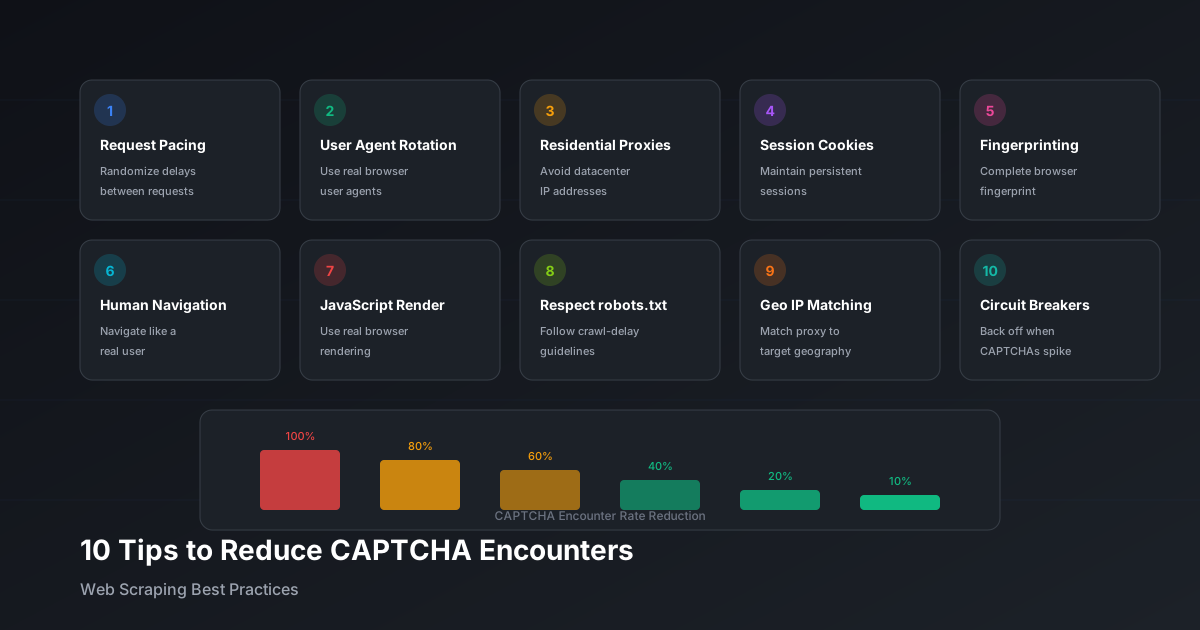
Why CAPTCHAs Trigger
Understanding why CAPTCHAs appear helps you avoid them. Common triggers include:
- Unusual request patterns (speed, volume, timing)
- Missing or suspicious browser fingerprints
- Known datacenter IP addresses
- Abnormal mouse/keyboard behavior
- Missing or stale cookies
The 10 Essential Tips
1. Implement Request Pacing
Randomize delays between requests to mimic human behavior:
import random
import time

def human_delay():
    # Random delay between 2-5 seconds
    delay = random.uniform(2, 5)
    # Occasionally take a longer break
    if random.random() < 0.1:
        delay += random.uniform(5, 15)
    time.sleep(delay)
2. Rotate User Agents
Use a pool of real, up-to-date browser user agents:
USER_AGENTS = [
    "Mozilla/5.0 (Windows NT 10.0; Win64; x64) AppleWebKit/537.36...",
    "Mozilla/5.0 (Macintosh; Intel Mac OS X 10_15_7) AppleWebKit/537.36...",
    # Add 10-20 real user agents
]

headers = {"User-Agent": random.choice(USER_AGENTS)}
3. Use Residential Proxies
Datacenter IPs are easily detected. Residential or mobile proxies blend in better.
4. Maintain Session Cookies
Persist cookies across requests to maintain legitimate sessions:
import httpx

# Use a client session to persist cookies
with httpx.Client() as client:
    client.get("https://site.com")  # Initial visit sets cookies
    client.get("https://site.com/data")  # Subsequent requests use cookies
5. Complete Browser Fingerprinting
Ensure your headless browser passes fingerprint checks:
// Use puppeteer-extra with stealth plugin
const puppeteer = require('puppeteer-extra');
const StealthPlugin = require('puppeteer-extra-plugin-stealth');
puppeteer.use(StealthPlugin());
6. Simulate Human Navigation
Don't jump directly to target pages - navigate naturally through the site.
7. Handle JavaScript Properly
Many CAPTCHA triggers rely on JavaScript checks. Use a real browser or render JS.
8. Respect robots.txt Rate Limits
Even if you're not bound by robots.txt, its crawl-delay hints at safe speeds.
9. Use Geographic IP Matching
Match your proxy location to the site's expected user geography.
10. Implement Circuit Breakers
When CAPTCHAs increase, back off before you get blocked:
class CircuitBreaker:
    def __init__(self, threshold=5, cooldown=300):
        self.failures = 0
        self.threshold = threshold
        self.cooldown = cooldown
        self.last_failure = 0

    def record_failure(self):
        self.failures += 1
        self.last_failure = time.time()

        if self.failures >= self.threshold:
            raise Exception(f"Circuit open - cooling down for {self.cooldown}s")

    def record_success(self):
self.failures = 0Ready to solve CAPTCHAs at scale?
Get started with 50 free credits. No credit card required.